



Blog
31.07.2023
Marble Block Inspections & Quarry Visit
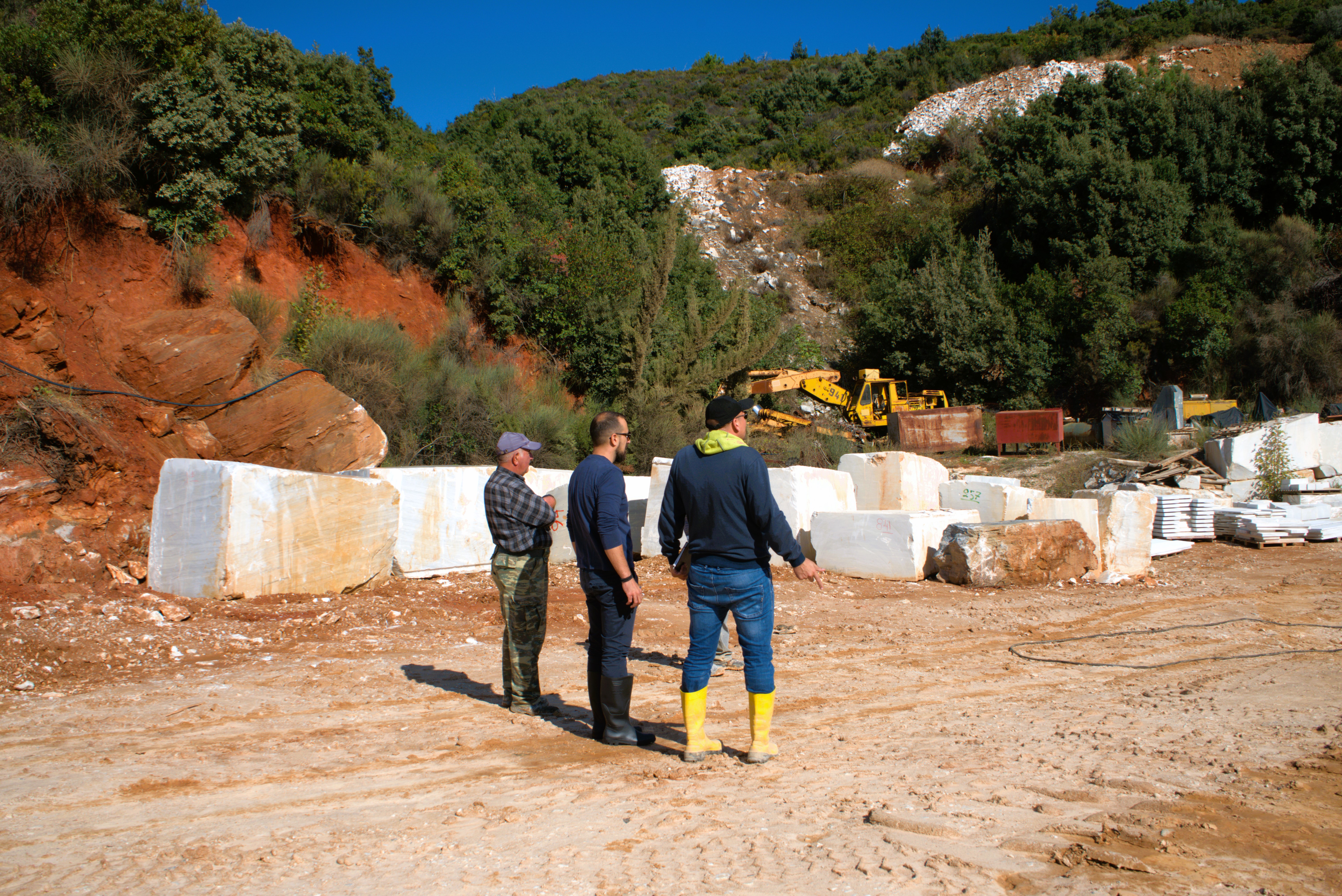
Inspecting marble blocks at a quarry is an essential process to ensure the quality and suitability of the blocks for further processing and use. The inspection process involves several steps that help identify any defects, cracks, or impurities in the marble. Depending on the client demand and quarry capabilities the steps for marble block inspection at the site could typically include:
- Preparing the quarry area: Before the inspection begins, the quarry area needs to be cleared and organized for easy access to the marble blocks. Any debris or loose materials should be removed from the vicinity.
- Visual examination: A preliminary visual inspection is conducted to identify any obvious signs of defects on the surface of the marble blocks. This step involves looking for visible cracks, fissures, color variations, mineral deposits, or any other irregularities.
- Physical measurements: Measurements of the block's dimensions are taken to ensure it meets the required specifications for size and thickness. This step is crucial to determine if the block can yield the desired sizes of slabs or tiles.
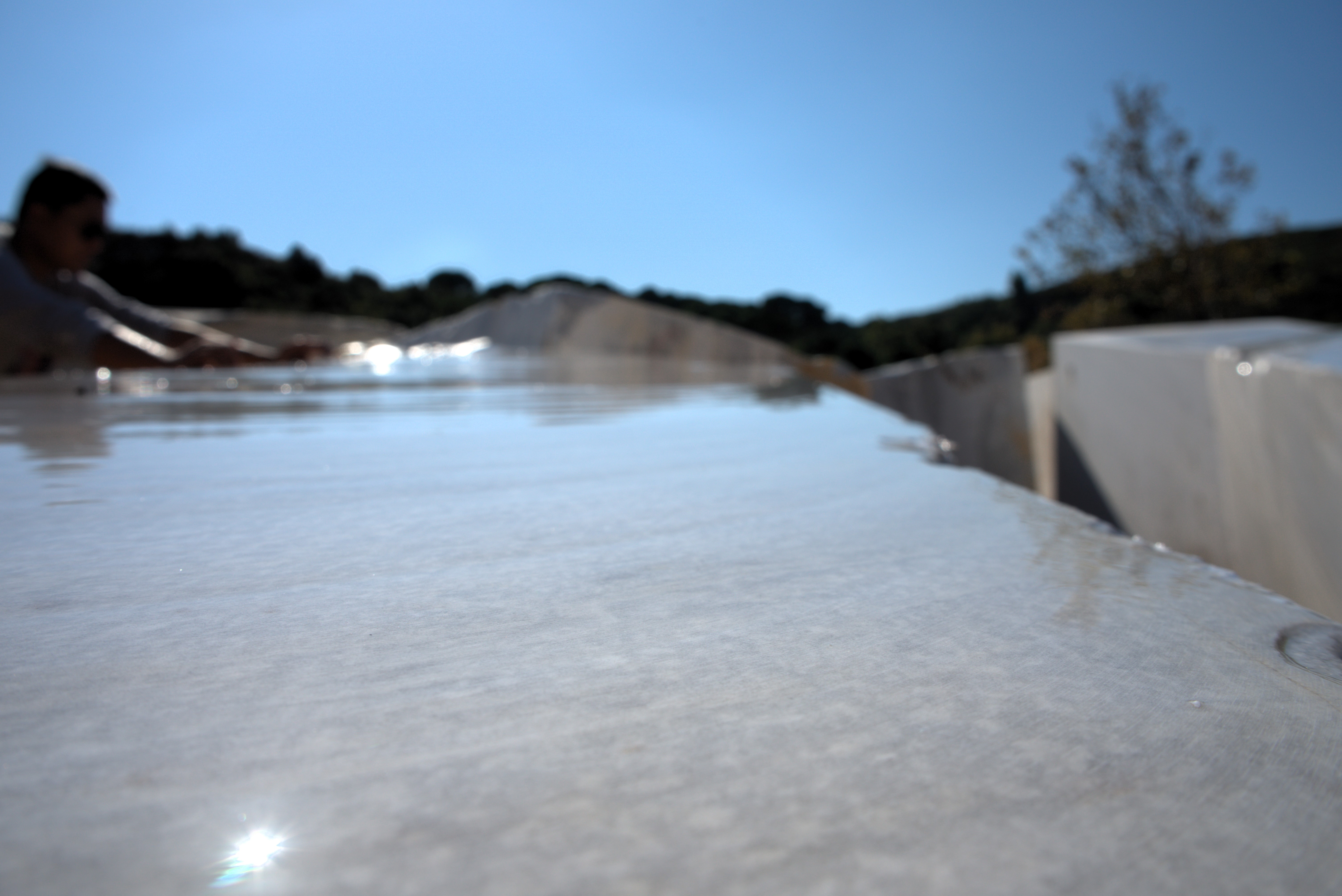
- Surface flatness assessment: The flatness of the marble block's surface is checked to ensure it is even and does not have significant undulations or irregularities. This is necessary for a smooth processing and installation of the marble.
- Ultrasonic testing: Ultrasonic testing is often employed to detect internal flaws or hidden cracks in the marble block. Ultrasonic waves are sent through the block, and the reflections of these waves are analyzed to identify any irregularities within the stone.
- Dye penetration test: This test involves applying a colored dye to the surface of the marble block, which penetrates any cracks or fissures. After a specific time, the excess dye is wiped off, and if there are any cracks or defects, the dye will remain in those areas, making them visible.
- Water absorption test: The water absorption rate of the marble block is tested by immersing it in water for a specified period. After the time elapses, the block is removed, and the weight difference is measured. A high-water absorption rate can indicate potential durability issues.
- Color and pattern matching: For projects that require multiple marble blocks to have consistent color and pattern, inspectors will compare the blocks to ensure they are a suitable match.
- Geological analysis: In some cases, a geological examination may be performed to assess the composition and mineral content of the marble block. This analysis helps determine the block's strength, durability, and suitability for specific applications.
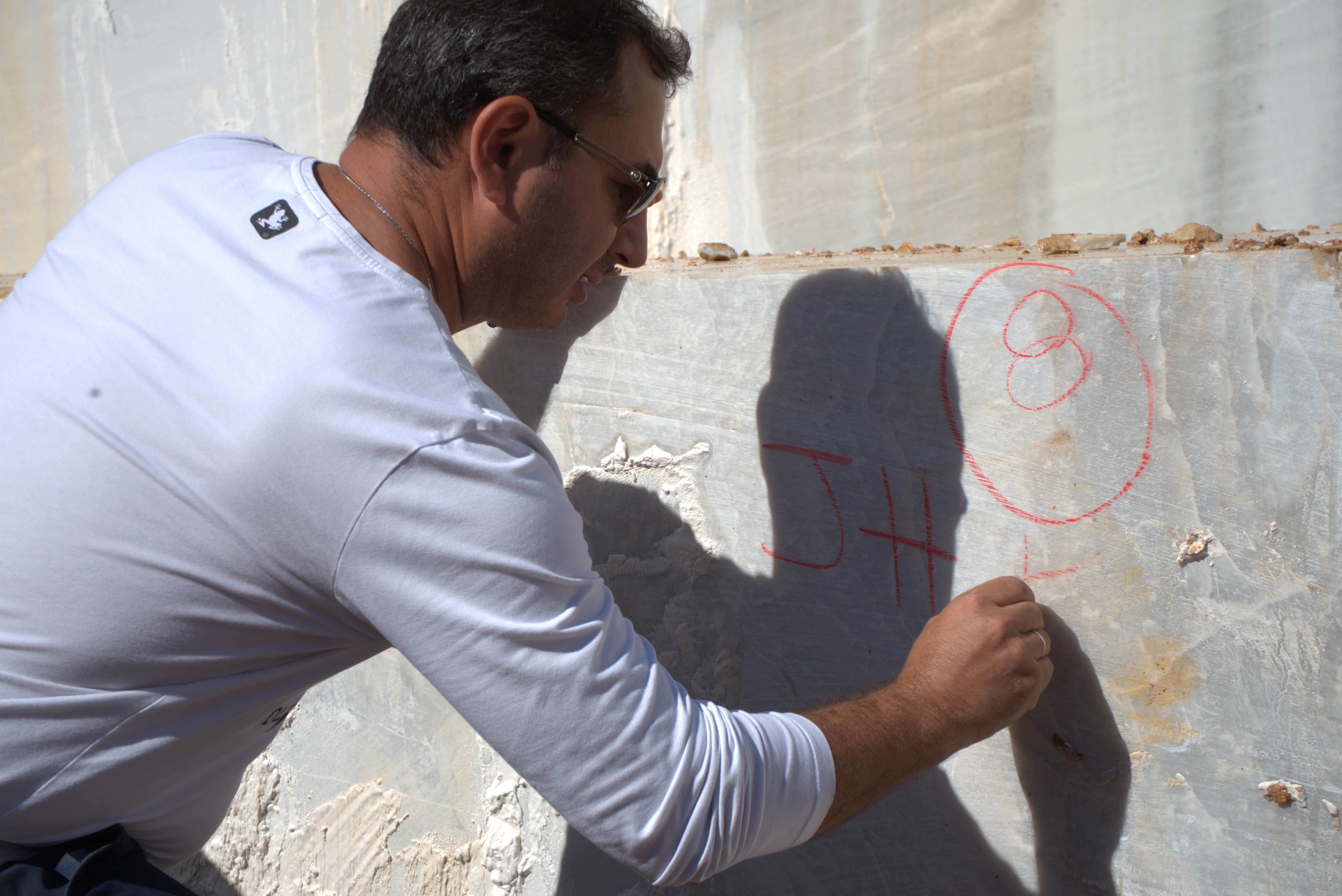
- Final selection and documentation: After conducting all the inspections, the qualified and suitable marble blocks are selected for further processing and are documented for traceability.
It's important to note that the specific steps and tests may vary depending on the quarry's standards, the type of marble being extracted, and the intended use of the blocks. The primary goal is to ensure that the extracted marble meets the required quality standards and is suitable for various applications in construction and design.
Discover here our wholesale activity & our quarries and contact us for a quarry visit.
Wholesale Europe - Asia - Middle East - Africa +30 22620 31500
Wholesale & Projects USA: +1 7049757424
stonetech@stonetech.gr
Discover here our wholesale activity & our quarries and contact us for a quarry visit.
Wholesale Europe - Asia - Middle East - Africa +30 22620 31500
Wholesale & Projects USA: +1 7049757424
stonetech@stonetech.gr